erapickleball.com pickleball classes: Comprehensive Class Schedules
@augustjdnd007
When a sport crosses over from hobby to practice, from weekend pastime to a reliable training discipline, the way you structure learning becomes almost as important as the coaching itself. At Era Pickleball, the aim behind the comprehensive class schedules is simple: give players a clear path toward consistent improvement, whether they are brand new to the sport or seasoned players chasing sharper footwork, faster shot selection, and smarter strategy. What follows is a close look at how era pickleball classes are designed, how the scheduling system works, and what you can expect to gain from the experience. It’s a window into a robust program built on practical drills, real-game scenarios, and the kind of progressive load that keeps players engaged without burning out.
If you are exploring timetables, you are likely juggling work, family, and other commitments. The reality is that for most athletes, the difference between a good season and a great season is the consistency of practice, not the intensity of a single session. The Era Pickleball approach leans into that truth. The classes are organized to maximize retention of technique while pacing difficulty to align with the calendar of a typical adult life. You will see options that fit a lunch break, a post-work routine, or a weekend block dedicated to deeper drills. The goal is to make training feel both manageable and meaningful, a steady incline rather than a steep climb.
This article digs into the specifics of the class schedule, but it also invites you to think about method as you look at the calendar. You will find that the best learning happens when there is a blend of repetition and challenge, when new material is layered onto established habits, and when feedback from coaches is timely and specific. The following sections are written from years of coaching hands on the court, soaked in the texture of late afternoon sessions, and informed by the quiet confidence that comes from seeing players translate drills into real improvement.
A sense of structure matters, but it should not feel rigid. A schedule that works for a person rarely works for a whole group of people unless it is adaptable. Era Pickleball recognizes this tension and has built a framework that allows for adjustments while preserving the core principles of skill development: control, movement, shot selection, and game sense. The classes are designed to be accessible, yet they respect the different starting points players bring to the court. Some arrive with a background in racquet sports, others are picking up a paddle for the first time. Each journey should feel supported, not graded, and that support comes through thoughtful progression, clear expectations, and a culture of constructive feedback.
In practice, the schedule is more than a timetable. It is a map that guides players through the essential building blocks of pickleball. The early blocks focus on grip, stance, and the fundamental groundstrokes. The mid blocks introduce movement patterns, ball placement under pressure, and transition between offense and defense. The later blocks push players to anticipate, adapt, and outperform in the pocket of a real rally. The coaching staff emphasizes rhythm—how to conserve energy on long points, how to accelerate when the moment calls for it, and how to read an opponent’s body language as much as the ball’s flight.
For someone curious about the big picture, it helps to think about two overarching ideas that shape every Era Pickleball class. First, there is a practical emphasis on drills that translate into match play. The difference between a great drill and a great rally is the degree to which the drill’s mechanics are preserved under pressure and multiplied in the chaos of a score. Second, there is a focus on consistency. Skills are broken down into repeatable patterns that players can trust in the heat of competition. Consistency comes from deliberate practice, and that practice is what the schedule is designed to support day after day, week after week.
If you already know the program and are looking for specifics, you will find a broad range of options that accommodate different levels, time constraints, and learning styles. The class roster includes beginner entry points that build confidence and stamina, intermediate pathways that emphasize shot variety and court coverage, and advanced modules aimed at sharpening decision making and tactical wear on the opponent. The schedule is not about stacking value on top of value, it is about layering the right kind of practice at the right time so your progression feels natural and sustainable.
In a game like pickleball, the tempo of learning matters. Too much information all at once can overwhelm newcomers, while too little can bore seasoned players who crave a sharper edge. The Era Pickleball timetable seeks a middle ground, offering a cadence that is easy to hold on to, yet rich enough to push the envelope when a player is ready. Coaches collaborate across sessions to ensure continuity. If a student moves from one class to another, the transition is designed to feel like a natural extension rather than a leap into the unknown. This continuity matters for keeping confidence high and motivation steady.
Before we explore the schedule in depth, a practical note: all class times are designed with accessibility in mind. Facilities are chosen for quality courts, and sessions are structured to minimize downtime. When you step onto the court for a Era Pickleball class, you are stepping into a setting that values attention to detail as much as it values competitive spirit. The equipment is standard, the coaching approach is standardized, and yet the human element—how a coach reads a student’s body language, how a group environment encourages careful listening and shared focus—remains the core of the experience.
The schedule is built around three core pillars: fundamentals, strategy, and competition readiness. Fundamentals are the building blocks that stay constant, regardless of your level. Strategy is the bridge between technique and real rally outcomes, and competition readiness is the stage where you test the gains you have made against a clock, against a partner, and against a changing tactical landscape. Each pillar is reflected in the class design, the drills chosen by the coaching staff, and the feedback given to players after every session. The aim is to make the gains tangible and measurable without turning the experience into a series of rigid tasks devoid of playfulness.
In practice, the class structure tends to blend instructional moments with live play. You may see a warm up that starts with footwork patterns, followed by a quick demo of the day’s focus, then a set of controlled drills designed to lock in mechanics. After that, players step into supervised scrimmage or game-like drills that emphasize the application of technique under pressure. The coach’s eye remains tuned to posture and balance as well as to paddle head speed and shot selection. The balance between guided practice and free rally is delicate, but it is precisely what makes the classes feel both rigorous and enjoyable.
For those managing busy schedules, a big part of choosing Era Pickleball classes is knowing what each session promises in terms of outcomes. A morning or lunch time block may be ideal for maintaining consistency during a busy work week, while an evening session might suit players who need a social and competitive outlet after the day’s commitments. The scheduling philosophy is not about forcing a one size fits all solution. It is about offering a spectrum of options that can be combined to form a coherent personal plan. If you feel unsure about where to start, the staff encourages a brief assessment, either in person or through a quick online form, that helps map a path aligned to your current level and your future goals.
There is a practical, almost diary-like aspect to how players approach the schedule. A typical weekly pattern might begin with a fundamentals session that keeps the basics crisp and repeatable. Midweek, a strategy-focused class might push you to translate that crisp technique into smarter shot selection and court positioning. The weekend could feature a simultaneous blend of light, technique-focused drills and a short match play module where you can test what you learned against players with similar goals. The beauty of this approach lies in its adaptability. If you have a week where your energy is lower, you can lean into shorter, lighter drills and still come away with useful refinements. If you find yourself in a stretch where physical condition allows, you can extend the practice with optional higher intensity sets or longer rally formats.
The coaches at Era Pickleball are chosen for their ability to diagnose problems quickly and to offer targeted adjustments. They are not just instructors who memorize a sequence of drills; they are communicators who translate technique into feeling. You will hear cues that are precise rather than abstract, cues that you can act on in the moment: shift weight into the inside edge of the lead foot during a forehand drive, relax the shoulder on the backhand, snap the wrist at the moment of contact to control pace. The aim is to create pockets of clarity: moments when you know exactly what to do and why you are doing it. That clarity, when repeated, becomes a habit. Habits, in turn, become the foundation of real performance.
The schedule does not pretend that improvement comes in linear barrels. There are weeks when progress feels incremental, and there are weeks when a minor technical tweak ripples through your entire play pattern. That variability is not a flaw; it is a natural part of learning a dynamic sport. You may experience a breakthrough with your serve one week and then a period of refocusing on your footwork the next. The structure of the class system, with its layered progression, is designed to accommodate these ups and downs without derailing motivation. It is common for players to report that their confidence grows not only from what they learn in class but from the simple act of showing up consistently and honoring a personal cadence.
If you are new to the Era Pickleball program, you may wonder what a typical first month looks like in terms of class content and progression. A beginner-level pathway usually emphasizes safe movement patterns, balance under load, and the basics of dink and drive exchanges. The coaching staff makes a point of demystifying the court geometry early, so you understand why you step to a certain angle, why you choose to retreat or advance, and how your paddle angle interacts with bounce height. Expect a steady pace that respects your learning curve, with a clear line of sight toward clarifying goals like finishing points with accuracy, not just power.
As players accumulate sessions, the curriculum shifts to incorporate more selective training. Mid-level classes tend to introduce more complex rally scenarios, such as cross court exchanges or the quick transition to the kitchen when the ball sits just out of reach. The coaching team emphasizes decision making under time pressure—what shot to play when the opponent is moving into your preferred zone, and how to manage your energy so you can stay sharp in the later stages of a set. These classes also begin to incorporate video feedback in some formats, letting players observe body mechanics and court positioning from a different perspective. The ultimate aim is not to flood players with information but to anchor the most impactful adjustments to memory through repetition and context.
Advanced modules bring tactical nuance into sharper focus. Players at this level learn to recognize opponent tendencies more quickly, to mix up pace and spin to disrupt rhythm, and to execute diversions that create space for a winning shot. You will see drills that emphasize live decision making—when to push the pace, when to pull back and reset, how to convert a defensive position into an aggressive finish. In the most competitive cases, the schedule incorporates controlled pressure points and short scrimmages that mimic high-stakes scenarios without compromising safety or enjoyment. This phase is about translating technical proficiency into reliable match play, a transition that often defines the spark of real improvement.
A central feature of the Era Pickleball class ecosystem is feedback. Coaches provide actionable guidance not only at the end of a session but during the drills themselves. The most effective feedback is specific, noting the exact moment a problem occurs and offering a precise correction. For instance, a coach might pause a drill to point out fatigue in the grip or to demonstrate a more efficient path to the ball. The aim is to cultivate an adaptive learning mindset. Players learn how to self diagnose and adjust while maintaining a focus on fundamentals that will stand up to the pressures of real games.
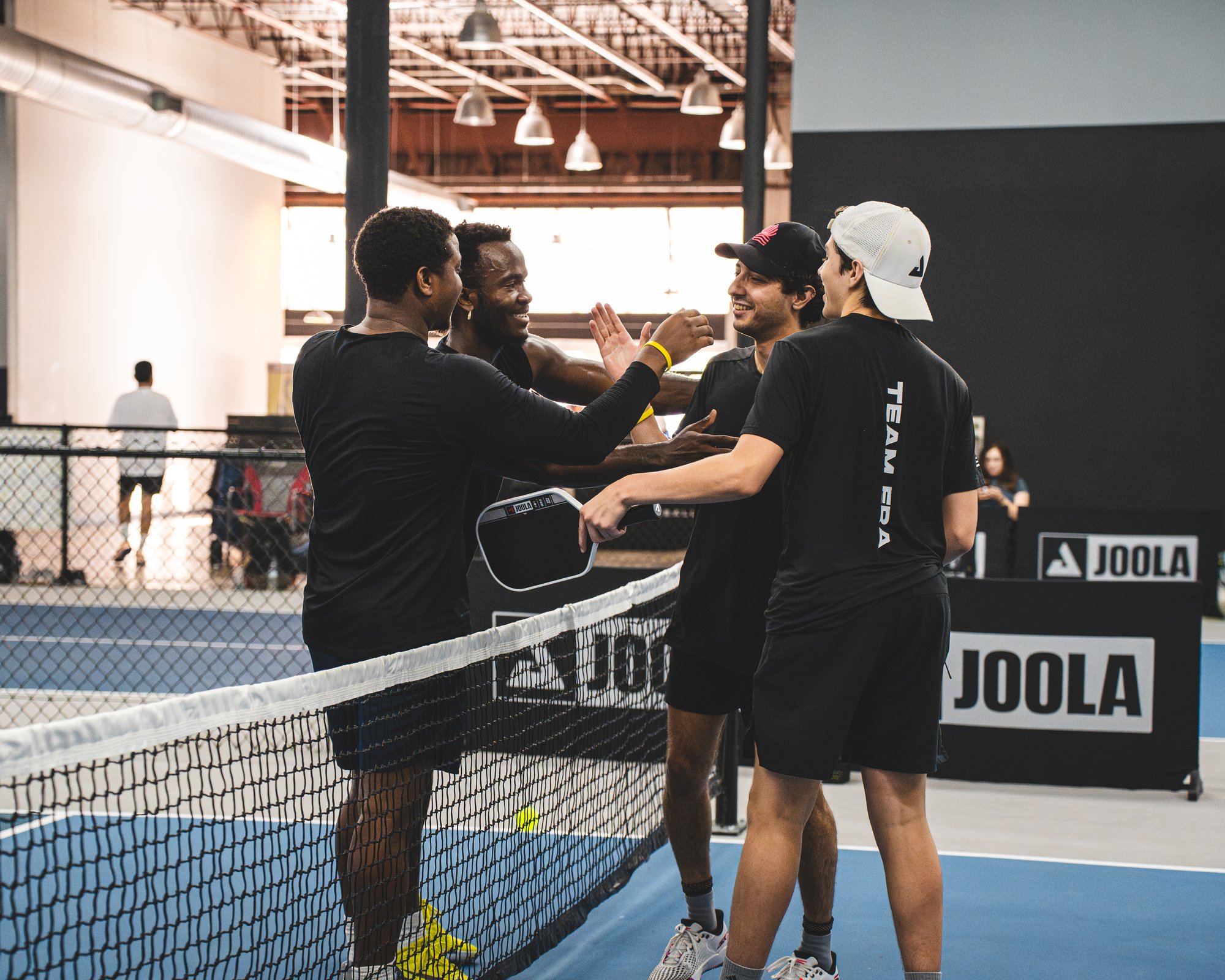
Beyond technique and strategy, there is a social dimension to the schedule that often goes unnoticed. The best teams in any sport are sustained by a culture that blends competition with camaraderie. Era Pickleball’s classes foster this balance with structured partner drills, optional social play windows, and a culture that celebrates incremental gains rather than grand, solitary breakthroughs. You will find players who return week after week not just to chase better shots but to share the small milestones—the footwork that finally feels light on the court, the moment a dink becomes consistent, the joy of a well-timed transition.
If there is one recurring challenge in a program of this scale, it is ensuring that the schedule remains inclusive for players with different bodies, different injury histories, and different comfort levels on the court. The Era Pickleball team tackles this head on by offering scalable drills, alternative modifications, and a suite of mobility and warm-up options that precede the main work. The goal is to minimize barriers to entry while preserving the integrity of the training. You may hear coaches encourage participants to adjust intensity, to swap drills for gentler equivalents, or to pause the session when needed. The emphasis is on sustainable practice that players can sustain across seasons, not heroic effort that collapses under the first sign of fatigue.
For people who want to maximize the educational value of their time, there are additional resources that complement the class schedule. Many players benefit from supplementary online tutorials, technique breakdowns, and practice plans that can be used between sessions. The combination of in person coaching and accessible learning materials creates a compelling environment in which knowledge is not something you absorb in a single session but something you accumulate across weeks and months. The approach respects the realities of busy lives while still delivering a clear path to meaningful skill development.
One recurring question from prospective students is how to pick between different class tracks. The answer hinges on a few practical considerations: your current skill level, your short term goals, the level of social interaction you want in your practice, and how you balance play with recovery. The beginner track is designed to reduce intimidation while building a solid base in movement and shot selection. The intermediate track increases the complexity of drills and integrates more match play to sharpen decision making. The advanced track pushes you toward higher speed, more precise ball control, and a greater emphasis on tactics. While these tracks provide guidance, the labels are not cages. A player can move between tracks depending on progress and the time they can allocate to practice.
The class schedule, in other words, is a living thing. It adapts to the season, to the influx of new players, and to the evolving understanding of what methods yield the strongest improvements in pickleball. The team continually analyzes feedback from players and observes on court to refine the cadence. They adjust the number of minutes allocated to technique versus play, tweak the emphasis on footwork patterns, and recalibrate the drills that produce the most reliable outcomes. This iterative process is the heartbeat of a program that aims to be both rigorous and humane, pushing players to grow while respecting the realities of the daily grind.
Two aspects deserve particular emphasis for anyone trying to align their personal plan with the Era Pickleball class schedules. First, consistency is the engine of improvement. A player who shows up regularly creates a feedback loop in which the brain and body gradually embed the correct movement patterns. Even when a session feels like it did not deliver dramatic results, the small refinements over time accumulate into a tangible advantage. Second, intention matters. Going to a class without a clear objective can dilute the experience. Whether you are focused on mastering a new serve or improving your ability to defend deep in the kitchen, articulating a goal for the session gives you a concrete target and helps the coach tailor the drills to you.
The schedules themselves include several recurring features that players come to rely on. A typical cycle features a dedicated warm up designed to prime the body for dynamic movement and quick court transitions. Then there is a quick, high yield demonstration that lays out the day’s focus without overloading you with jargon. After that, a sequence of progressively challenging drills helps cement the technique while building endurance. Finally, a short, controlled rally segment gives you a chance to apply what you learned under the slightly imperfect timing of a real game. The structure is crafted to feel predictable in the best possible way—familiar enough to comfort you, but varied enough to prevent stagnation.
For those who are curious about the practical impact, the proof is in the success stories you encounter on and off the court. Players who commit to the Era Pickleball class schedules often report not just improved rally outcomes but a deeper sense of control in matches. They describe how the logistics of practice become almost automatic—the way footwork and paddle position flow in a rally, the way their brain anticipates shots a shot or two earlier than before. They talk about a newfound patience in long points, a sharper sense of when to attack, and a calm, strategic approach when facing a tough opponent. Improvements like these are rarely a single moment of realization; they are the result of repeated exposure to the right drills, the right pacing, and the right feedback.
To illustrate how this plays out in the real world, consider a player named Alex who joined a mid-level program after several months of casual play. Alex began with fundamentals that corrected a tendency to drift sideways on forehands. The coach identified a precise correction in weight transfer, introduced a simple series of footwork drills, and integrated a few quick resets in the drill design. Over the next six weeks, Alex found that the dink exchange sequences felt less strained and more predictable. In late sessions, Alex reported that during matches in a club league, timing around the non volley zone improved, the ball staying lower and more predictable, which translated into more opportunities to finish points cleanly. This is not a single anecdote; it is a common arc that players describe when the schedule is followed with consistency and attention.
Another dimension worth noting is the accessibility of class times. For players who travel or balance work obligations, the ability to choose from morning, midday, and evening windows makes a meaningful difference in adherence. The ability to lock in a regular routine reduces the cognitive load associated with scheduling and helps preserve the energy needed for high quality practice. The calendar is designed to be navigable rather than overwhelming, with clear guidance on how to switch tracks if your goals shift or if you need to accommodate a return to training after an injury. This kind of flexibility can be a decisive factor in whether a player sticks with the program long enough to experience meaningful gains.
In this piece, two lists provide concise snapshots of the kinds of offerings you can expect to find in Era Pickleball classes. They are not exhaustive, but they capture the core ideas that drive the schedule and the coaching philosophy.
-
Class Tracks and Focus

-
Fundamentals track emphasizes grip, stance, slice and drive basics
-
Intermediate track expands on shot variety and court coverage
-
Advanced track targets tactical depth and fast decision making
-
Strategy modules concentrate on pattern recognition and opponent reading
-
Live play and scrimmage formats to test skills under pressure
-
Scheduling Flexibility and Access
-
Morning blocks designed for early risers and lunchtime players
-
Evening blocks that fit around work and family commitments
-
Shorter booster sessions for busy weeks with maintenance drills
-
Longer blocks for players seeking sustained, deep practice
-
Assessment and transition options to help move between tracks
If you want to make the most of Era Pickleball classes, here are practical steps you can take as you consult the schedule and plan your month. Start with a short self assessment that identifies your current skill color, so to speak. Where does your primary strength lie, and what needs the most attention? Is your serve reliable enough to let you own the first few shots in a rally, or does your movement break down under fatigue? Then map those insights to the available tracks. Pick a plan that is honest about your starting point and ambitious enough to push your boundaries in a measured way.
A key recommendation is to preserve a gentle progression. It is tempting to pack as many sessions as possible into a single week, but in pickleball, as in many skill centered sports, faster is not always better. A space between sessions gives the brain a chance to consolidate technique, to adjust to new motor patterns, and to recover. The best practice routines often involve a deliberate rhythm—two to three sessions per week with a recovery day or two in between. If your calendar permits, add one lighter maintenance session each week pickleball era that focuses on mobility, balance, and control. This kind of cadence tends to yield not only better on court results but a healthier relationship with the sport over time.
Where you train matters as well. The environment should feel safe and supportive but also challenging enough to push you to test new limits. The court surface should be consistent and the lighting adequate for extended practice blocks. The coaching staff should be accessible and communicative, offering feedback that is direct yet constructive. The gear should be reliable—paddles that feel balanced, balls that bounce consistently, and nets that stay taut through a long day. These details matter because they shape how quickly you can put new skills into play and how comfortable you feel making adjustments in real time.
In terms of fairness and inclusivity, Era Pickleball has built its class schedules with an eye toward equity. The idea is not to gatekeep access behind a wall of credentials or competition level. Instead, it is to ensure that players of all backgrounds can participate meaningfully. The schedules accommodate varied fitness levels, accommodate different learning paces, and provide guidance for adapting drills to different body types and conditions. Coaches remain mindful of the fact that not every player is pursuing a pro level trajectory; many players simply want a sport they can enjoy for years to come, stay active, and meet friends on a regular basis. The scheduling structure respects that reality by valuing consistency, safety, and enjoyment as essential outcomes.
Finally, the broader value of a well curated class schedule goes beyond the court. The discipline of showing up, warming up properly, following a plan, and then debriefing with a coach creates a habit loop that translates into other parts of life. You learn to manage time, to set measurable goals, and to reflect on what works and what does not. You cultivate patience, an essential ingredient for any sport that demands precision and strategic thinking. And you join a community—a network of players who share a common interest and who support one another through the inevitable ups and downs of training. In the long run, that community aspect often proves as important as any single drill or technique you learn.
The comprehensive class schedules at Era Pickleball are more than a timetable. They are a carefully designed ecosystem aimed at steady improvement, sustainable practice, and a meaningful engagement with the sport. The approach respects the realities of modern life while preserving the integrity of deliberate, thoughtful coaching. It is not a grand experiment but a tested methodology built on years of practical experience on the court. For players who want to move beyond casual play and into a disciplined path toward skillful, confident pickleball, the schedules offer a credible, proven route.
If you are ready to dive in, the next step is straightforward. Check the current cycle of class offerings, review the tracks that align with your goals, and consider how many sessions you can realistically commit to in a given month. Reach out to the coaching staff with your self assessment and goals. They will help you place yourself on a path that respects your starting point while gradually expanding what you can accomplish. The schedule is designed to be navigable, but more importantly, it is designed to be meaningful. The difference between a plan that looks good on paper and a plan that changes your game is the commitment you bring to the process and the consistency with which you show up.
In short, Era Pickleball pickleball classes deliver more than a set of exercises or a string of drills. They offer a structured, thoughtful approach to learning that respects both the art and science of the sport. The schedules are built to be approachable for beginners and challenging for advanced players, with a clear through line from fundamentals to competitive readiness. They provide a framework within which players can observe real growth, feel the improvements in their rallies, and carry that momentum into their next match. If you value practical coaching, reliable progression, and a supportive community, this is a program worth exploring. The ball is in your court. Your next move is to choose a path, commit to it, and see how far consistent, well planned practice can take you in pickleball. The on court intelligence, the calm in pressure, and the sense that you are growing—these are the outcomes that the Era Pickleball class schedules aim to cultivate, session after session, week after week.